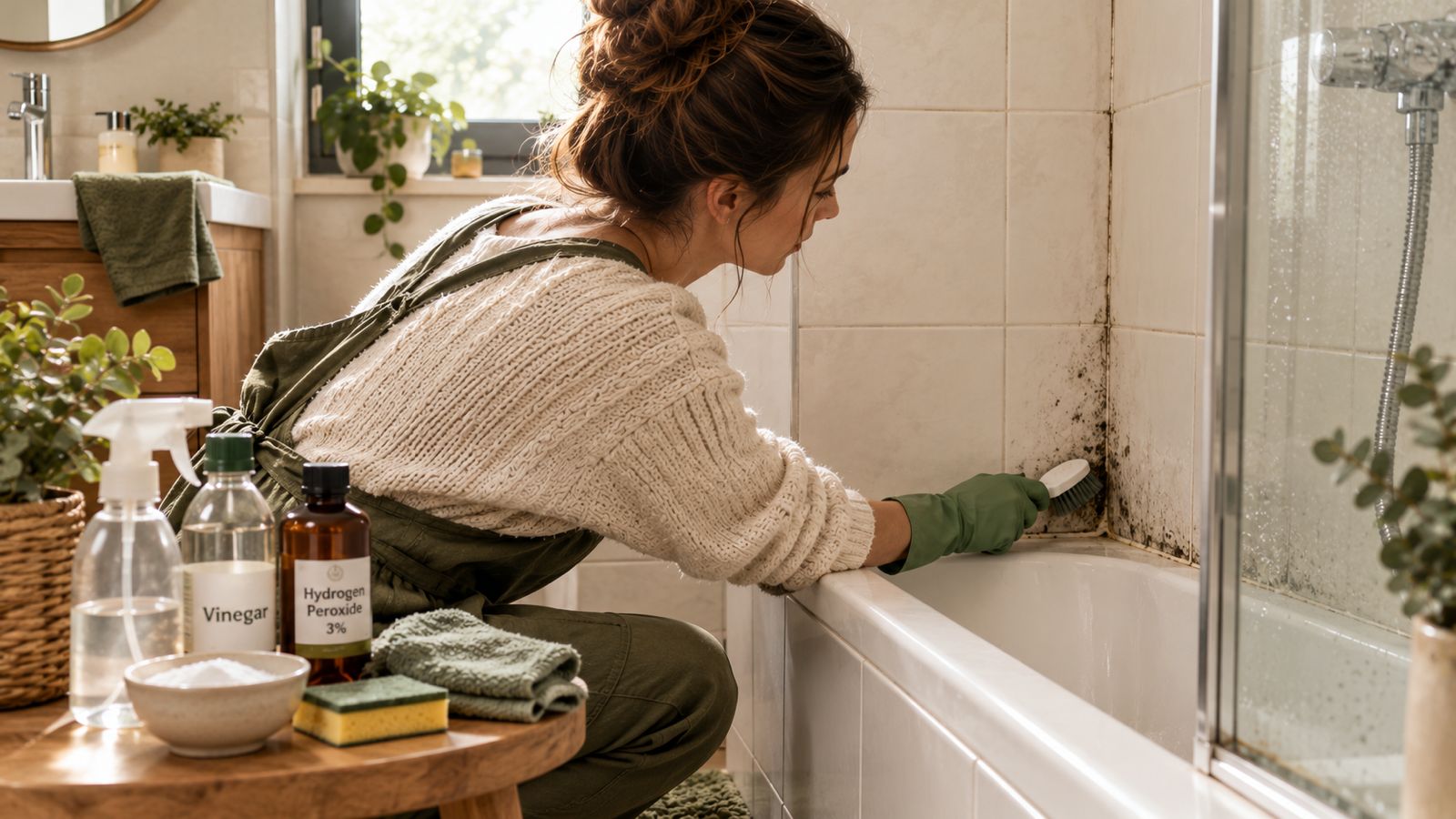
Dark patches in the corner of the bathroom. Black streaks in the silicone. A greenish-grey cloud in the corner of the bedroom. Mould is one of the most common problems in homes, and one of the most frequently ignored. It's not just unsightly, it's living organisms that release spores and, in some cases, toxins which can cause allergies, respiratory problems and, with prolonged exposure, more serious health consequences. This guide explains why mould forms, how to recognise it and, most importantly, how to get rid of it for good.
What exactly is mould?
Mould is a fungus that grows in colonies visible to the naked eye. In a domestic environment, the most common types we encounter are:
| Type of mould | Colour | Where it appears | Danger |
|---|---|---|---|
| Cladosporium | Green/grey/black | Grout, window frames | Moderate (allergies) |
| Aspergillus | Green/yellow/brown | Walls, ceilings | Moderate to high |
| Penicillium | Blue/green | Food, walls | Moderate |
| Stachybotrys (black mould) | Black | Constantly damp walls | High (toxic) |
| Alternaria | Dark, velvety | Bathrooms, basements | Moderate |
Black mould (Stachybotrys chartarum) is particularly problematic because it releases mycotoxins that can cause neurological symptoms, nosebleeds and immunosuppression with prolonged exposure. If you see a large patch of black mould (larger than the palm of your hand), call a professional.
Why mould occurs: causes
Mould only needs three things to grow: moisture, organic food and a favourable temperature. In the home:
- Moisture: condensation on cold walls, leaking pipes, inadequate ventilation
- Organic food: paint, wood, paper, textiles, dust (all are organic food for mould)
- Temperature: mould grows from 5°C to 35°C, the optimum is room temperature
Most common causes of moisture in the home
- Insufficient ventilation in bathrooms and kitchens
- Drying laundry indoors without ventilation
- Leaking pipes or roof (hidden)
- High relative humidity (above 60%)
- Cold walls that condense moisture (poor insulation)
- Showering and cooking without ventilation
Where does mould most commonly hide?
- Grout and silicone in the bathroom and kitchen
- Behind and under the bath/shower cubicle
- Window frames and sills (condensation)
- Behind furniture against an external wall (colder, condensation)
- Under the kitchen sink (leakage)
- Basements and garages
- Air ducts
- Under carpet on a concrete floor
Health effects of mould
| Symptom | Related | At-risk group |
|---|---|---|
| Nasal, eye allergies | Airborne spores | Everyone, especially allergy sufferers |
| Asthma (exacerbation) | Spores + mycotoxins | Asthmatics, children |
| Chronic cough/bronchitis | Long-term exposure | All |
| Fatigue and headaches | Mycotoxins | Sensitive individuals |
| Skin irritation | Direct contact | Children, allergy sufferers |
| Neurological symptoms | Stachybotrys toxins | All with prolonged exposure |
Mould removal methods: from mild to severe
Method 1: White vinegar (for mild mould)
Thanks to its acidity, vinegar kills many types of mould. Suitable for grout, walls and hard surfaces:
- Apply undiluted white vinegar with a sprayer directly onto the mould
- Leave for a minimum of 1 hour (ideally 2-3 hours)
- Scrub with a brush
- Wipe with a damp cloth
- Dry thoroughly
Method 2-3% Hydrogen Peroxide (for moderate mould)
Hydrogen peroxide oxidises and kills mould and breaks down the pigments that leave dark stains:
- Apply 3% hydrogen peroxide (from a pharmacy) directly
- Leave for 10-30 minutes
- Scrub and wipe clean
- No rinsing is necessary (it breaks down into water and oxygen)
Method 3: Steam Cleaner (chemical-free disinfection)
Steam at 130°C kills 100% of mould spores on contact. Kärcher SC5 with grout nozzle:
- Penetrates deep into the pores of cement grout
- Eliminates mould and spores without chemicals
- Ideal for bathroom grout, silicone and tiles
- After the steam treatment, apply a preventative impregnator
More on cleaning grout with a steam cleaner in the guide How to Clean Grout Without Scrubbing.
Method 4: Chlorine gel (for heavy mould in silicone)
For black mould deep in the silicone, a chlorine gel (Domestos gel, a specific anti-mould gel) that stays on the surface:
- Good ventilation is essential (gloves + mask)
- Apply the gel directly onto the affected silicone
- Cover with cling film (prevents drying, increases contact time)
- Leave for 2-4 hours or overnight
- Rinse thoroughly
If the mould returns within 1-2 weeks, the silicone is saturated and needs to be replaced.
Checklist: removing mould step by step
- ☐ Identify all areas of mould (visual inspection, your nose, mould has a smell)
- ☐ Determine the cause of the moisture (leak, condensation, ventilation?)
- ☐ Ensure the room is ventilated (open windows, mask, gloves)
- ☐ Choose a method according to the intensity of the mould
- ☐ Apply the product, wait, scrub, wipe
- ☐ Thoroughly dry the room (fan, heating)
- ☐ Apply a treatment or anti-mould coating for prevention
- ☐ Address the source of the moisture to prevent the mould from returning
Prevention: how to prevent mould from returning
- Ventilation: open windows or use a fan for 20 minutes after showering
- Rubber squeegee: wipe the glass and tiles immediately after showering
- Relative humidity below 50%: dehumidifier in damp rooms
- Seal grout and silicone joints once a year
- Regularly ventilate the bedroom (especially in the morning)
- Move furniture 5-10 cm away from external walls, for air circulation
When to call a professional?
- The area of mould is larger than 30x30 cm
- Mould reappears despite regular cleaning
- Black mould with a strong smell (Stachybotrys)
- Mould inside a wall (visible signs of moisture on the inside)
- A person in the home has asthma, allergies or an immunodeficiency
Local context
Flat owners in Dugo Selo, Sesvete, Brckovljani, Vrbovec and Sveti Ivan Zelina with mould problems most often face them in older buildings with poor thermal insulation, where moisture condenses on cold walls. Spring cleaning is the ideal opportunity to thoroughly inspect and treat all areas affected by mould, applying a treatment and preventative measure for the rest of the year.
Frequently Asked Questions (FAQ)
Is mould in the home dangerous to health?
Mild growths (Cladosporium, Penicillium) cause allergies and respiratory problems, especially in children, the elderly and allergy sufferers. Black mould (Stachybotrys) is potentially toxic and requires professional treatment. Any mould in a child's room is a cause for immediate action.
Why does mould return to the same spot?
Mould returns because the cause has not been eliminated. Removing the visible mould without addressing the moisture source is only a temporary fix. Spores remain in the air and on adjacent surfaces. Without prevention (ventilation, treatment, moisture reduction), a new growth cycle begins in 2-4 weeks. Address the cause of the damp, it's the only permanent solution.
Can mould penetrate deep into the wall?
Yes. Mould that has been on a wall for a long time penetrates plaster, mineral wool, wood and insulation. What you see on the surface may be just the tip of the problem. If the wall has been damp for a long time (due to a roof leak or a burst pipe), surface cleaning is not enough. The wall needs to be opened up, the structure cleaned and dried, and then the damaged materials replaced.
Is it permissible to paint a wall without first removing the mould?
No. Painting over mould only hides it, the mould grows underneath the new paint and will break through the surface in 3-6 months. The only correct order is: remove the mould → dry the wall → apply an anti-mould primer → paint. For serious cases, it is advisable to use an anti-mould paint for the final coat.
Is white vinegar safe for children after treating mould?
Yes. Vinegar is harmless to people and pets. After treatment, wipe the surface with a clean, damp cloth and dry it. The smell of vinegar disappears within 1-2 hours. Unlike chlorine gel, which requires thorough rinsing and ventilation, vinegar is the safest solution in homes with children.
How to spot hidden mould behind furniture?
Signs: a musty smell with no visible source, black stains on the wall behind a wardrobe or sofa, visible condensation on external walls, a measured high relative humidity (over 70%). A UV lamp can reveal mould in some cases, but it is not reliable for all types. Periodically moving furniture away from external walls is the only reliable way to check.
How long does it take to remove mould in the bathroom?
For mild grout mould (steam cleaner + brush): 30-60 minutes. For moderate mould in silicone (chlorine gel): 4-6 hours (including waiting time). For silicone replacement: 1-2 hours of work + 24 hours for the new silicone to cure before wet contact. For a complete bathroom mould remediation: 1 working day.
Can mould grow on synthetic (PVC) surfaces?
Mould cannot "eat" PVC, but it can grow ON it using dust and biological material as food. Silicone is particularly prone because it is porous and absorbs organic material. PVC window frames are less prone than wooden ones, but they are not immune. Regular wiping and ventilation are sufficient for PVC.
How can I prevent mould in a wardrobe?
Do not put clothes that are not completely dry in the wardrobe, and do not push it right up against a cold outside wall. Leave a few centimetres of space so air can circulate, and open and air the wardrobe now and then. In damp rooms, moisture absorbers or a dehumidifier help.
When should I call in a specialist about mould?
When the mould covers more than about one square metre, keeps coming back despite cleaning, or is caused by damp in the wall, the roof or the plumbing. In those cases cleaning alone does not help, the source of the moisture has to be found and fixed.
Conclusion
Mould in the home is a problem that requires action, not ignoring. Mild mould, vinegar, peroxide, steam. Heavy mould, chlorine gel and professional help. The source of the damp, deal with it, or everything else is a waste of time. With a preventative routine (ventilation, wiping, impregnation), mould stays permanently out of your home.
If you don't have the right equipment or simply don't feel like doing it yourself, get in touch. We can come and do the cleaning for you, or you can hire Kärcher machines and do it yourself.