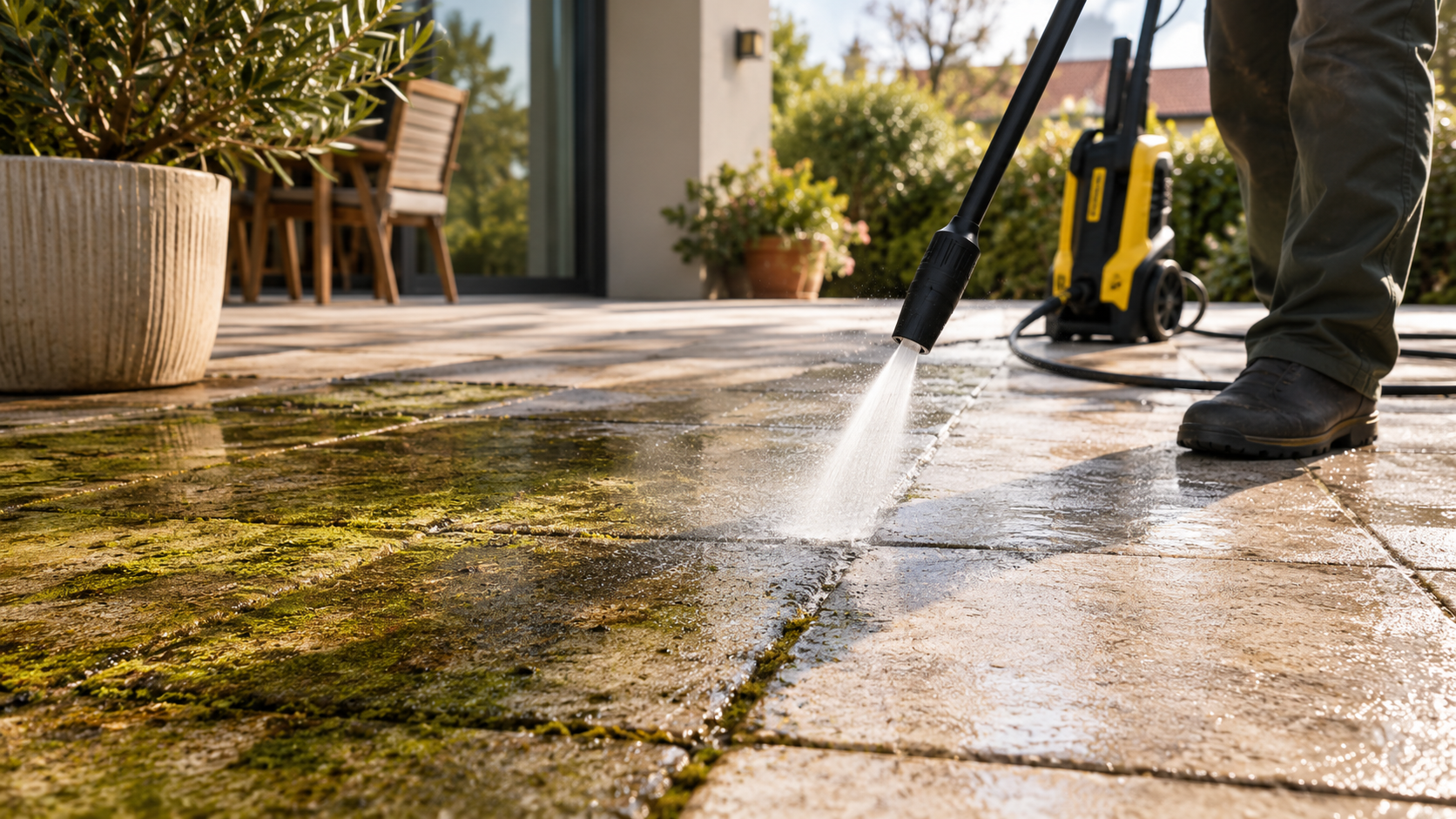
Over the winter the patio turns green, the stone darkens and moss grows between the slabs. Scrubbing that with a brush and water takes days, while a pressure washer does it in a few hours. But only if you know which pressure and nozzle to use, because too strong a jet can wash out the joints, scratch the stone or tear up wood.
Before washing: preparing the patio
- move the furniture, plant pots and rugs
- sweep up leaves, soil and coarse dirt
- check the drain or edges where the water will run off
- close windows and doors and cover nearby sockets and lights
- protect delicate plants along the edge of the patio
Which pressure and nozzle for which surface?
| Surface | Attachment | What to watch |
|---|---|---|
| Concrete and concrete slabs | Rotary nozzle (Dirt Blaster) | Even strokes so no stripes remain |
| Natural stone | Vario Power, medium pressure | Softer stone (limestone, sandstone) is more sensitive, test on a hidden spot first |
| Stone and concrete pavers | Vario Power or rotary nozzle from further away | Do not aim the jet straight into the joints or you will wash out the sand |
| Wooden decking | Vario Power, low pressure | Wash along the grain, at least 30 cm away |
| WPC (composite) | Vario Power, low pressure | Check the decking manufacturer's instructions |
The rotary nozzle (Dirt Blaster) is the strongest for stubborn dirt, but also the most aggressive. Do not use it on wood or delicate stone.
Washing step by step
- Test the pressure on a less visible corner of the patio, starting further away and moving closer gradually
- Work from top to bottom, from the wall or highest point towards the drain, so dirty water does not run over the cleaned area
- Keep a steady distance and use overlapping strokes at roughly the same speed
- Hold the jet at an angle, not straight down at one spot, especially at the joints
- Rinse the whole surface with clean water at the end, so no marks from loosened dirt remain
Moss, algae and green deposits
Moss and algae grow where it is shady and damp. The jet removes them from the surface, but roots in the joints soon grow back. So after washing, refill the joints between pavers or slabs with dry jointing sand, and repeat the wash now and then in shady corners. If green deposits reach the wall or facade, see our guide on mould and damp too.
After washing
- let the patio dry completely, a few hours in summer and longer in the shade
- put sand back into the joints if the jet washed it out
- once dry, protect wooden decking with oil or a wood stain
- if you like, protect stone and concrete with a sealer so they get dirty more slowly
The patio is best washed in spring and given a light refresh in autumn before the winter. You can combine it with the rest of your seasonal clean.
Frequently asked questions
How long does it take to clean a patio with a pressure washer?
It depends on the size and how dirty it is. According to the manufacturer, the Kärcher K 7 cleans up to 60 m² per hour, so an average patio is done in one to two hours, including preparation and rinsing.
Will the pressure washer wash the sand out of the joints?
Partly, especially if you aim the jet straight into the joint. Wash at an angle and from a little further away, and refill the joints with dry sand once everything has dried.
Can wooden decking be pressure washed?
Yes, but at low pressure, with the Vario Power lance and along the grain. The rotary nozzle and too short a distance tear up the wood fibres and leave the surface rough.
Do I need a patio cleaning product with a pressure washer?
Usually not. For greasy stains, for example from a barbecue, a product made for pressure washers helps, added through the Plug 'n' Clean system, then rinsed off with clean water.
How do I remove a barbecue grease stain from stone?
Cover a fresh stain with an absorbent material, such as sand or cat litter, and sweep it up after a few hours. Treat what is left with a stone degreaser following the instructions and wash with the pressure washer. Old stains sometimes need several attempts.
Can I wash the patio in winter?
We do not recommend it. At low temperatures water stays in the pores and joints, and if it freezes it can damage stone and concrete. Wash when the weather is warmer and dry.
Why is the patio stripy after washing?
Usually because of uneven distance or speed. Wherever you held the nozzle closer or longer, the surface is cleaner. Go over the whole surface once more with even, overlapping strokes.
Can I also clean the low walls and steps by the patio?
Yes, following the same rules: from top to bottom, with distance and moderate pressure. Be especially careful with rendered walls, as the jet can damage cracked or crumbling render.
Should a stone patio be sealed after washing?
It is not essential, but it helps. A sealer closes the pores, so oil, wine and dirt get into the stone less easily and the patio stays clean for longer. It is applied to a completely dry surface.
How often should a patio be washed?
Thoroughly once or twice a year, in spring and, if needed, in autumn. In between, sweeping and rinsing with water is enough.
If you do not have a pressure washer, hire a Kärcher K 7 from us. You get operating instructions with the machine, and delivery is possible by arrangement.