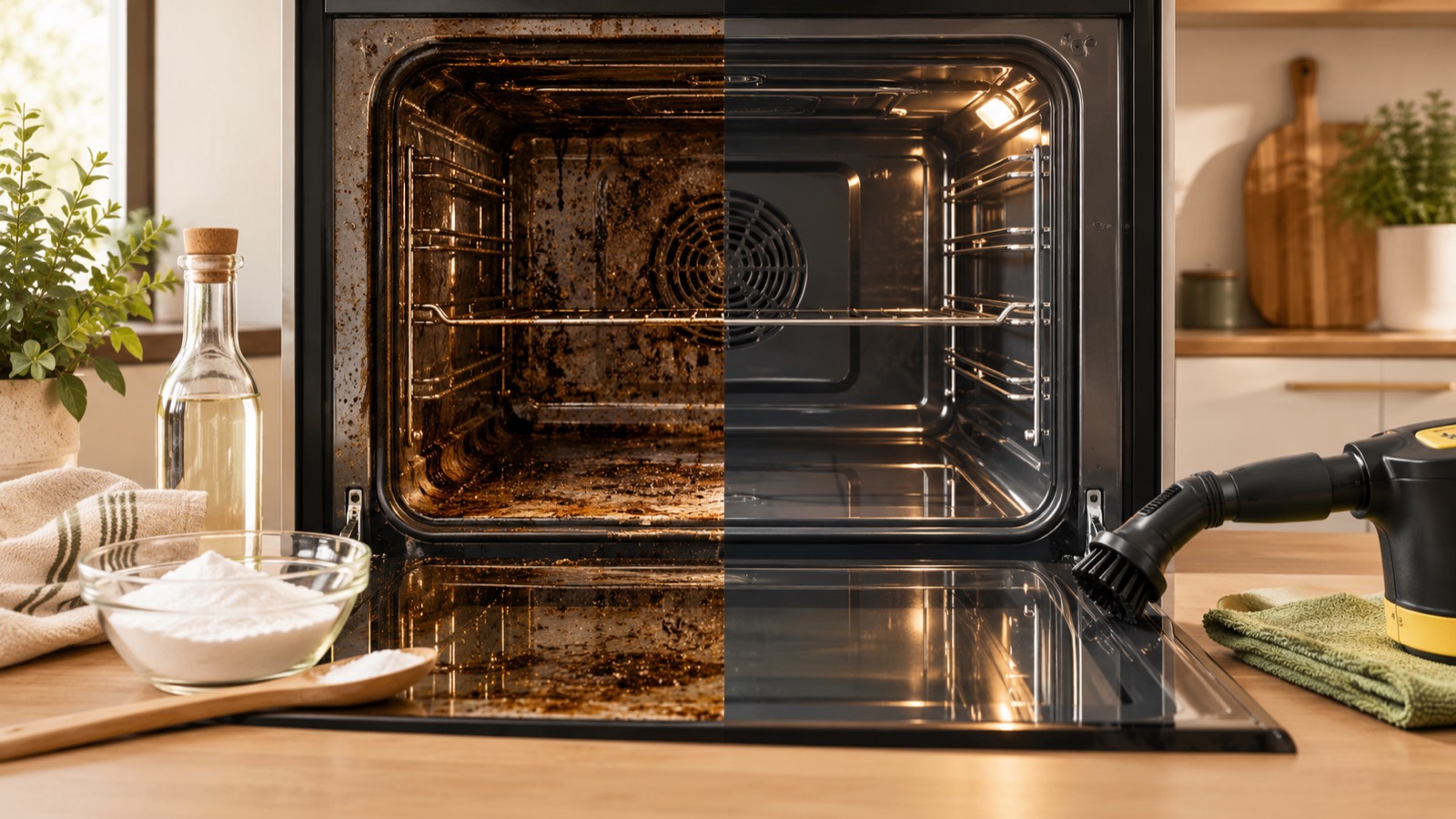
Burning off grease in the oven? The smoke that escapes every time it heats up? The baked-on deposits that look as though they've been there since you bought it? The oven is probably the most off-putting task on the kitchen cleaning list. And it's understandable, heat polymerises the grease into a hard, plastic-like build-up that doesn't respond to standard cleaning. But there are methods that change that. No hours of scrubbing, no harsh chemicals, no smoke and no unpleasant odours.
Why is an oven so hard to clean?
When you bake at 180-220°C, splashes of grease and marinade land on the walls and base of the oven, where they polymerise as they heat, turning into a hard, plastic-like build-up. This build-up:
- Do not heat with cold or hot water
- Standard cleaners cannot break it down without prolonged contact
- Over time, it becomes thicker and more difficult to remove
- When heated, it smokes and transfers the smell to food
Method 1: Bicarbonate of soda overnight (the most effective DIY method)
This is the most effective method for thoroughly cleaning the oven without chemicals. It requires preparation, but only 10 minutes of work in the morning.
Preparation (in the evening)
- Remove the racks and the baking tray
- Mix 200 g of bicarbonate of soda with enough water to make a thick paste
- Spread the paste over all the internal surfaces of the oven, the bottom, walls, and ceiling (avoid the heating elements)
- For heavier build-up: apply a thicker layer
- Close the oven and leave for at least 8 hours (ideally 12)
In the morning
- Wipe everything down with a damp cloth, the bicarb has broken down the grease and the grime will slide off.
- Scrape the dry soda and loosened grease away with a plastic spatula
- For any remaining stubborn spots: spray diluted white vinegar onto the bicarb (it reacts, foams, and loosens the residue)
- Wipe thoroughly with a clean, damp cloth
Result: 10-15 minutes of wiping in the morning vs. an hour of scrubbing without this method.
Method 2: Steam Cleaner (SC5)
Steam at 130°C melts polymerised grease through thermal decomposition. Method:
- Wait until the SC5 is fully heated
- Point the nozzle into the cold oven (do not bake immediately beforehand, for thermal safety)
- Go over every wall and the bottom with the brush attachment, steam + brush dislodge the deposits
- Wipe immediately with a microfibre cloth, the fat slides off the warm surface
- Repeat for stubborn areas
The SC5 method is particularly effective on fresh grease (up to 2-3 weeks old). For years-old build-up, a combination of the overnight bicarbonate of soda method and SC5 in the morning gives optimal results. For more on the correct use of a steam cleaner, see the guide 'Common Mistakes with a Steam Cleaner'.
Method 3: Pyrolytic function (if your oven has one)
The pyrolytic function heats the oven to 480-500°C, the grease is burnt to ash:
- Remove the racks (they must not be included in the pyrolytic cleaning)
- Select the pyrolytic programme (it lasts 2-3 hours)
- The oven locks automatically for safety
- Once finished and cooled, wipe away the ash with a damp cloth
Pros:
fully automated, chemical-free.
Cons:
high electricity consumption, strong smell/smoke on first use, lengthy, cannot be used every time.
Method 4: Commercial oven cleaners
Commercial oven cleaners like Mr. Muscle or Cillit Bang are the most effective for old and stubborn build-up, but they contain strong alkalis (NaOH) which require:
- Rubber gloves
- Good ventilation
- Eye protection
- A thorough rinse
Comparison of methods
| Method | Efficiency | Chemicals | Effort | Price |
|---|---|---|---|---|
| Bicarbonate of soda overnight | High | None | Low | Negligible |
| Steam cleaner (SC5) | High (fresh) | None | Medium | Rental |
| Pyrolytic cleaning | High | No | Minimal | Electricity |
| Commercial cleaner | Highest | Strong | Medium | Medium |
Grates and baking tray: special cleaning
Grates
Soak in a mixture of warm water, 3-4 tablespoons of bicarbonate of soda and a drop of washing-up liquid. Leave for 30-60 minutes. Rack inserts that are dishwasher-safe, on a high-heat cycle with a powerful tablet.
Baking tray
Sprinkle bicarbonate of soda onto a damp tray, cover with aluminium foil and leave for 2-3 hours. Alternatively, use a specific oven tray cleaner. For blackened, burnt-on trays that have been in use for years, replacing them can sometimes be more cost-effective than cleaning them.
How often should you clean your oven?
- Immediately every time: wipe up drips as soon as the oven has cooled down (5 seconds of effort = no build-up)
- Weekly: a quick check, wipe the racks
- Monthly: a more thorough wipe-down of the interior
- Quarterly: a complete clean using one method
Local context
For households in Dugo Selo, Sesvete, Vrbovec and Brckovljani that make heavy use of their ovens (especially around the holidays, for baking cakes and roasting meat), an annual full oven clean using a steam cleaner or the bicarbonate of soda method is the recommended minimum. The upcoming spring clean is the ideal opportunity to clean the oven, fridge and all kitchen appliances after winter.
Frequently Asked Questions (FAQ)
Can bicarbonate of soda be left on for longer than 12 hours?
Yes: there are no harmful effects from leaving it on for longer. You can apply it in the evening and clean it off the next evening (24 hours). Leaving it on for longer can be useful for heavily burnt-on grime, but 8-12 hours is sufficient for the average oven.
Is vinegar safe to use in the oven?
Yes, diluted vinegar is safe for all oven types, enamel, stainless steel, glass. Use it as an addition to the bicarbonate of soda method (spray it on after applying the bicarb, it reacts and foams, helping to loosen the grime). It is not recommended for use with commercial oven cleaners.
Can the oven be used immediately after chemical cleaning?
It is recommended to rinse thoroughly (wipe with a damp cloth 2-3 times) and briefly preheat at 200°C with the door ajar (10-15 mins) to remove any chemical residue. After this, the oven is safe for normal use.
Can a steam cleaner damage the oven interior?
No, if used correctly. The oven must be cold. Steam does not damage the enamel, glass door or stainless steel. Avoid direct contact of the steam with the heating elements (especially in gas ovens, do not aim it at the gas jet). Electric heating elements can withstand a quick blast of steam, but caution is certainly advised.
Which cleaning method is most effective for old, years-old build-up?
The combination is the most powerful: a bicarbonate of soda paste overnight (12 hours) → wipe down in the morning and use the SC5 steam for any remaining stubborn areas → for extremely old build-up, add a commercial cleaner to the toughest spots. This approach eliminates even several years' worth of build-up without intensive scrubbing.
What to do if the oven smokes when heating up?
Smoke on heating is almost always burning grease. Urgently: switch off the oven (if it's not too hot), open the windows, and turn on the extractor fan. As soon as it has cooled down, identify and remove the sources of grease (drips on the element, at the bottom). Regular cleaning after each use will eliminate this problem.
Is pyrolytic cleaning harmful to your health?
Pyrolytic cleaning releases smoke and vapours from the burning fat. For healthy adults with good ventilation, it is not dangerous. It is recommended to open all the windows, switch on the extractor hood, and leave the kitchen for 1-2 hours. Birds (especially parrots) are sensitive to the fumes during a pyrolytic clean, remove them from the flat. Do not use the pyrolytic function if there are children with asthma present.
Can I use sodium bicarbonate (bicarbonate of soda) and a chemical cleaner together?
No. Bicarbonate of soda is an alkaline base, and commercial cleaners are strong alkalis, mixing them creates a neutralised, less effective mixture. Use one method or the other, never together. After the soda, use vinegar only to rinse away the residue.
How do I clean the oven door glass?
Apply a paste of baking soda and a little water to the cooled glass, leave it for 15 to 20 minutes, then wipe with a damp cloth. Remove any residue with a ceramic hob scraper held at a shallow angle. On many ovens the inner glass can be removed, so clean between the panes too, following the manufacturer's instructions.
How do I clean oven racks and trays?
Soak them overnight in the bath or a large container with warm water and a little washing-up liquid or baking soda. In the morning, clean them with a brush or a non-scratch sponge and rinse well. If the manufacturer allows it, you can also put the racks in the dishwasher.
Conclusion
A clean oven isn't a dream, it's 10 minutes of effort a week plus one thorough clean a quarter. The bicarbonate of soda overnight method is a revolution for those who have been avoiding this clean for years. Try it once and you won't go back to standard scrubbing.
If you don't have the right equipment or simply don't feel like doing it yourself, get in touch. We can come and do the cleaning for you, or you can hire Kärcher machines and do it yourself.