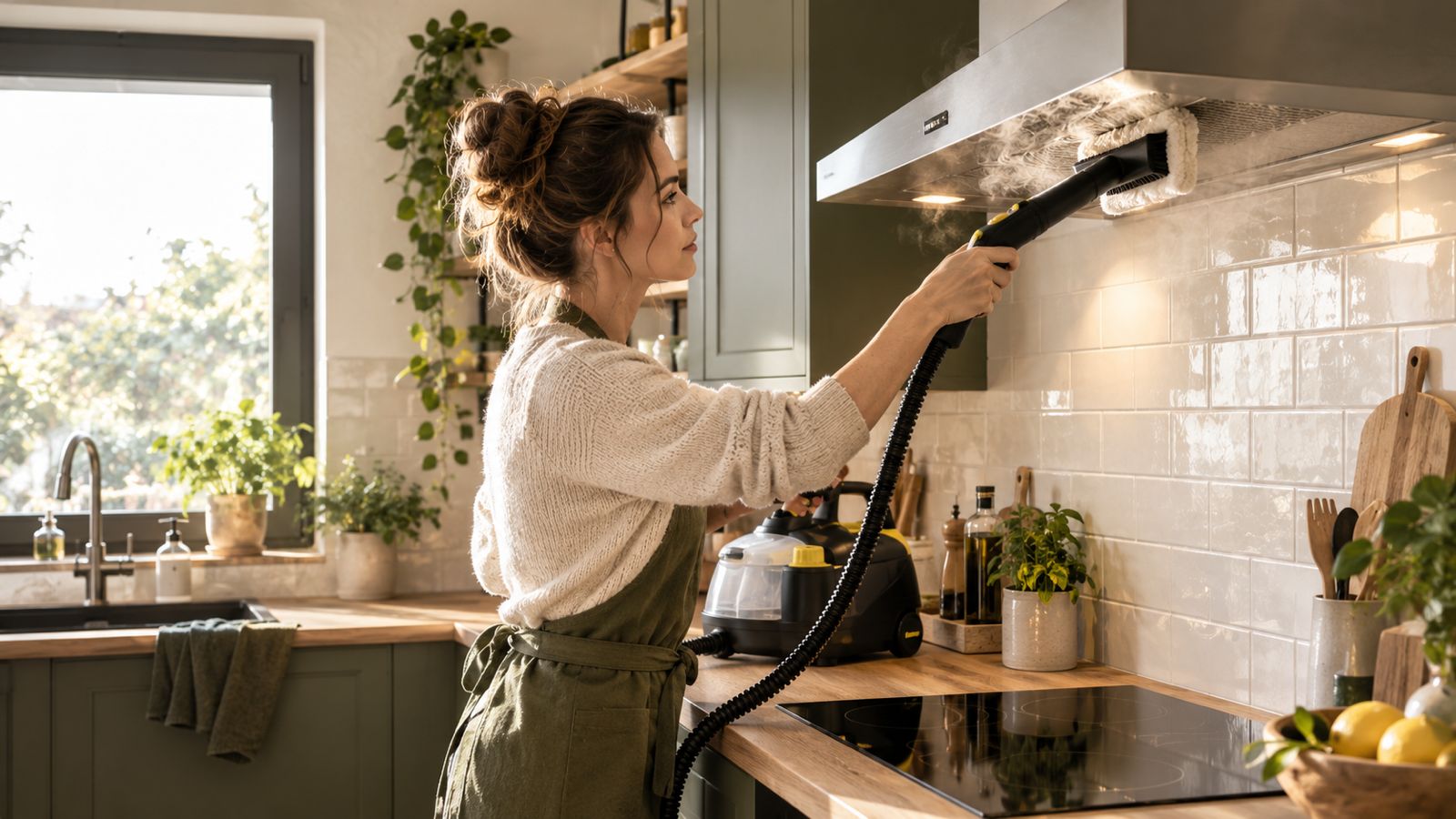
The kitchen is the most-used room in the house and, by a long shot, the one that gets the dirtiest the fastest. Fat splattered during frying and cooking coats everything over time: the extractor hood, the walls behind the cooker, the fronts of the cupboards, the tap, and even the floor. The problem is that it happens slowly, bit by bit each day, so we don't notice until one day we realise the kitchen is actually grey, not white. This guide goes through every part of the kitchen, the methods and the order for effective cleaning, without a single harsh chemical.
Why is kitchen grease so stubborn?
Kitchen grease isn't just fat, it's a complex mixture:
- Animal and vegetable oils that heat up and oxidise
- Proteins from meat and eggs that polymerise at high temperatures
- Sugars that caramelise and stick it all together
- Water vapour that carries all of the above in an aerosol form
The result? A sticky, polymerised build-up that, over time, hardens and becomes almost impossible to remove with standard cleaning. The key is regularity, and the right approach.
The most effective methods without harsh chemicals
1. Bicarbonate of soda + white vinegar
A classic combination for kitchen grease. But, importantly, DO NOT mix them in the same container. Use them separately:
- Apply a bicarbonate of soda paste (soda + a little water) to the greasy surface
- Leave for 10-15 minutes to neutralise the grease (the alkaline base breaks down fats)
- Wipe with a damp cloth
- For stubborn residue: vinegar spray (diluted 1:1 with water) on the remaining grease
- Wipe and rinse
2. Lemon as a natural degreaser
Cut a lemon in half and rub it on the greasy surface, the citric acid breaks down the grease and leaves a fresh scent. For tougher stains, mix the juice of one lemon with 2 tablespoons of bicarbonate of soda to make a paste.
3. Steam method (Kärcher SC5)
The Kärcher SC5 is particularly powerful in the kitchen. Steam at 130°C melts polymerised grease without any chemicals:
- On the extractor hood (grille + interior): nozzle with a metal brush, grease slides off
- On the walls behind the cooker: triangular attachment + microfibre, steam + wipe
- On the glass-ceramic hob: gentle steam pulse + microfibre wipe
- On the grill and barbecue: a metal brush, irresistibly effective on burnt-on grease
4. Commercial plant-based degreaser
If you're not a fan of chemical degreasers, there are plant-based ones on the market (e.g. Ecover, Better Life) that use enzymes and natural surfactants. They're just as effective on fresh build-up, with a bit more elbow grease required for old stains.
Kitchen zone by zone: what, with what and how
| Zone | Problem | Method | Frequency |
|---|---|---|---|
| Hood: grid/filter | Grease build-up | Dishwasher (metal) or boil with bicarbonate of soda and vinegar | Once a week |
| Hood: interior | Grease build-up | Degreaser + SC5 steam | Once a week |
| Wall behind the cooker | Aerosol grease | Bicarbonate paste + wipe / SC5 | Weekly |
| Glass-ceramic | Burnt-on stains | Special glass-ceramic cleaner + scraper | After each use |
| Gas hob | Grease + food residue | Bicarbonate of soda + vinegar + brush | Weekly |
| Front of cupboards | Grease from hands + aerosol | Degreaser + microfibre | Weekly |
| Inside the cupboard | Crumbs, marks | Vacuum cleaner + damp cloth | Once a week |
| Kitchen floor | Grease + residue | Degreaser on the floor + mop | 2-3 times a week |
The extractor hood: the biggest enemy
The extractor hood collects grease more intensely than any other surface in the kitchen. A filter that hasn't been cleaned for more than a week or two changes colour from grey to yellow-brown and stops filtering the air effectively. Methods for cleaning the extractor hood filter:
Hood's metal grid
- Remove the grid (it usually pops out with a press)
- Soak in a mixture of hot water + 3-4 tablespoons of bicarbonate of soda + a drop of washing-up liquid
- Leave for 15-30 minutes
- Scrub with a soft brush
- Rinse and dry
Alternatively: metal grilles (not plastic ones!) can be put in the dishwasher on a high temperature setting with a normal tablet. The result is outstanding.
Carbon filter for the extractor hood (replaceable)
Charcoal filters are NOT washable: they are replaced once or twice a year. Washing does not restore their absorption capacity.
The Oven: a special story
Oven cleaning deserves a guide of its own: but in short: a bicarbonate of soda paste left overnight on greasy build-up, then gently wiped off without scrubbing the next day. SC5 steam + a metal brush for burnt-on residue. Details in a separate article.
Consistency is key: a kitchen cleaning plan
Every day (5-10 minutes)
- ☐ Wipe the worktops and the wall behind the cooker immediately after cooking
- ☐ Rinse the sink and taps
- ☐ Wipe down worktops
- ☐ Empty the bin
Every week (20-30 minutes)
- ☐ Wash the extractor hood filter
- ☐ Wipe the fronts of all cupboards
- ☐ Wipe down the worktops thoroughly
- ☐ Clean the floor with degreaser
- ☐ Wipe the outside of the fridge
Once a month
- ☐ Clean the inside of the microwave
- ☐ Wipe inside the cupboards
- ☐ Thoroughly clean the cooker
- ☐ Disinfect the sink and drain
Tips for preventing grease
- Always use the lid when frying: far less grease ends up in the air
- Switch on the extractor hood even when steaming or boiling water, condensation carries grease
- Kitchen splashbacks are underrated: they protect walls and cupboards from splashes
- A silicone splashback around the hob catches drips and is easy to clean
Local context
In Dugo Selo, Sesvete, Brckovljani, Vrbovec and Sveti Ivan Zelina, seasonal general kitchen cleaning in spring and before holidays (Christmas, Easter) is a common practice. Hire a Kärcher SC5 steam cleaner for the day: extractor hood, worktop, oven, walls, all in one go without a drop of chemical. A result that lasts.
Frequently Asked Questions (FAQ)
Can bicarbonate of soda be used on all kitchen surfaces?
Yes, with one exception: bicarbonate of soda is slightly abrasive and is not recommended on polished stainless steel (it can leave fine scratches) or on aluminium surfaces (it can cause darkening). On ceramic, glass, enamel, laminate and plastic, completely safe.
How often should the extractor hood be cleaned?
Clean the hood's filter once a week if you cook every day, or once every two weeks for less intensive cooking. The inside of the hood, once a week. Charcoal filter (for recirculating hoods), replace every 3-6 months. Regularly cleaning the filter extends the life of the hood's motor and reduces the risk of a grease fire.
Can a steam cleaner be used on a glass-ceramic hob?
Yes, but with caution: the glass-ceramic must be cold (do not use steam on a hot hob, the temperature shock can cause a crack). On a cold hob, a short burst of steam with a microfibre cloth is an excellent method for fresh stains. For old, burnt-on stains, a special glass-ceramic scraper (plastic razor) is more effective.
Is white vinegar safe for kitchen cupboards?
Diluted vinegar (1:1 with water) is safe for laminate and plastic-coated cupboards. On lacquered wood, test in an inconspicuous corner as the acid can darken or discolour the lacquer. On foil-clad cupboards, safe. On bare, uncoated wood, avoid.
What to do with grease that has already browned and hardened?
Old, hardened grease requires mechanical softening before chemical treatment. Place a damp cloth (soaked in hot water) over the build-up for 10-15 minutes, the steam from the cloth softens it. Then, use a degreaser or a bicarbonate of soda paste, allow it to sit for 20 minutes, and use a plastic scraper for mechanical removal. Applying SC5 steam directly onto the old grease is the most effective method.
How to remove the frying smell that lingers in the kitchen?
The smell of frying lingers in the air and gets absorbed into fabrics and wood. Solutions: Boil a cup of water with an orange or lemon peel (neutralises the smell). An open bottle of vinegar in the kitchen absorbs the smell overnight. Bicarbonate of soda in a corner of the kitchen. A fan + an open window for at least 30 minutes after cooking. For a persistent smell that has soaked into the walls:the odour removal guide provides details.
Can the grease in the extractor fan cause a fire?
Yes: this is a serious safety risk. The build-up of grease in the hood is flammable. In the event of a hob fire that spreads to the hood, the grease can cause a flash fire. Regularly cleaning your extractor hood isn't just about hygiene, it's a fire safety measure. Firefighters recommend cleaning the hood at least once a week if you cook heavily.
What is the difference between a degreaser and a standard cleaner?
Degreasers are alkaline or enzyme cleaners specifically formulated to break down lipids (fats and oils). Standard cleaners are neutral and effective for general dirt, but they do not break down polymerised grease. For kitchen grease, always use a degreaser (kitchen degreaser), not a general-purpose cleaner. Natural alternative: bicarbonate of soda (an alkaline base) is the most effective DIY degreaser.
How do I clean greasy tiles behind the cooker?
Spray the tiles with warm water and washing-up liquid or a degreaser and leave it for a few minutes so the grease softens. Then wipe with a microfibre cloth and clean the grout with a soft brush. For old build-up, a steam cleaner with a small brush works well.
How do I clean dish sponges and cloths so they do not smell?
Wash cloths at 60 °C at least once a week and spread them out to dry after use. Rinse and wring out the sponge well every day, and replace it every week or two. A wet sponge left in the sink starts to smell the fastest.
Conclusion
Cleaning your kitchen of grease isn't a one-off project but a weekly habit. Five to ten minutes every day saves you an hour or two once a week. With the right methods and good tools, steam, bicarbonate of soda, vinegar, you can have a sparkling kitchen without a single harsh chemical.
If you don't have the right equipment or simply don't feel like doing it yourself, get in touch. We can come and do the cleaning for you, or you can hire Kärcher machines and do it yourself.