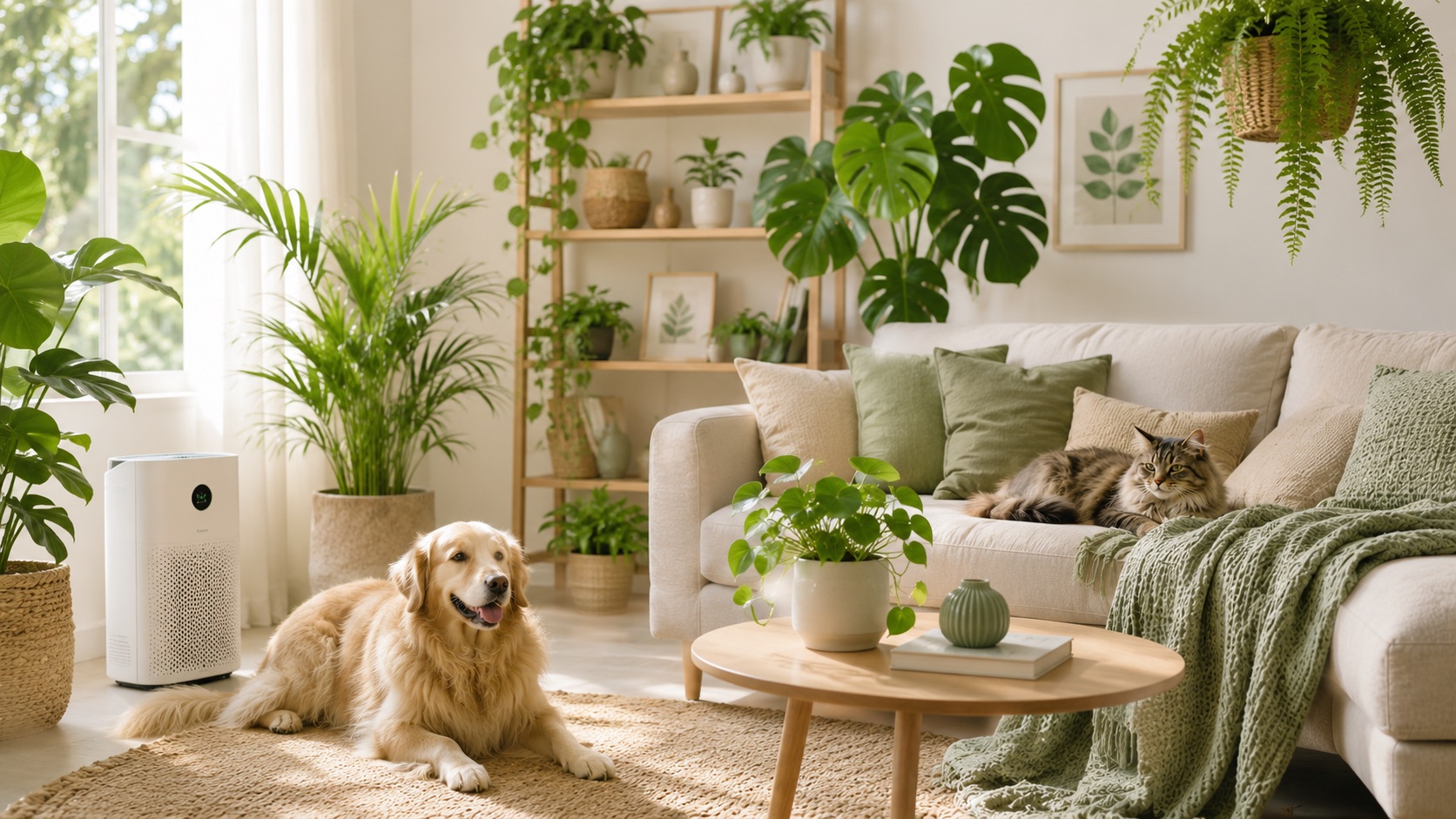
Allergies to indoor allergens are very common, in adults and children alike. Symptoms such as a runny nose, sneezing, watery eyes, coughing, rashes and, in the worst cases, asthma attacks depend directly on how many allergens there are in the space you live in. The good news is that the amount of allergens in your home is not fixed. With the right measures you can reduce it considerably and noticeably improve your quality of life.
The main allergens in the home
| Allergen | Where it comes from | Where it builds up | How troublesome |
|---|---|---|---|
| House dust mites | Dead skin cells | Mattress, pillow, carpet, furniture | Very |
| Pet hair and dander | Cats, dogs, rabbits | Everywhere, especially textiles | Very |
| Mould spores | Damp areas | Bathroom, kitchen, walls | Very |
| Pollen | Outdoor air | Windows, floors, textiles | Seasonal |
| Cockroaches and their droppings | Kitchens, cellars | All surfaces | Very, especially with asthma |
| Volatile chemicals | Paint, cleaning products, furniture | Air | Moderate to very |
House dust mites, allergen number one
Dust mites are tiny arachnids that live in every home. They don't bite or fly, but their droppings and remains are strong allergens that cause allergic rhinitis, asthma and eczema in sensitive people.
The mattress, the centre of mite life
A mattress that is never cleaned can be home to hundreds of thousands of mites. Body heat and moisture at night give them perfect conditions to multiply. What helps:
- an anti-allergy cover on the mattress and pillows, which mites cannot get through
- bedding washed at 60°C every week, as that temperature kills mites
- deep cleaning the mattress every 3-6 months with a Kärcher Puzzi 10/1, as hot water and extraction remove mites and allergens
- airing the room every morning for 15 minutes, as mites can't stand dry, fresh air
More in the articles Deep cleaning a mattress: how often? and Dust mites in your mattress: a complete guide.
Carpets and upholstery
A carpet collects mites just like a mattress. For allergy sufferers:
- a HEPA vacuum cleaner every day
- deep cleaning the carpet with a Puzzi every 3 months
- consider replacing the carpet with a smooth floor, which suits allergy sufferers better
- deep cleaning upholstered furniture every 3-6 months
Pet hair and dander
The allergy is not actually caused by the hair, but by proteins in the animal's saliva, urine and dander (shed skin). The hair simply spreads them around.
How to reduce pet allergens
- keep the pet out of the allergy sufferer's bedroom, or at least off the bed
- brush the pet regularly, outside rather than indoors
- bathing the pet regularly reduces the amount of allergen
- vacuum textile surfaces every day with a HEPA vacuum cleaner
- run an air purifier with a HEPA filter
- deep clean furniture and carpets more often
More in the article Cleaning a home with pets.
Mould and spores
Mould spores in the air cause allergies and asthma in sensitive people. What helps:
- humidity below 50%, with a dehumidifier in damp rooms
- airing the bathroom and kitchen after every use
- cleaning grout and sealant regularly, so mould can't grow
- an air purifier with a HEPA and activated carbon filter, which traps spores
In detail in the article Mould in the home: causes and a lasting solution.
Pollen
Pollen comes in through windows and on clothes and shoes. During pollen season (April to June for grasses, August for ragweed):
- keep windows closed when pollen levels are highest, roughly from 10 am to 4 pm
- air briefly early in the morning, between 6 and 8 am, when there is less
- shower and change clothes when you get home
- run a HEPA purifier indoors
- wash bedding every week, as pollen settles on it too
Controlling humidity and air
| Measure | Allergens it reduces | How much it helps |
|---|---|---|
| HEPA air purifier | Mites, pollen, spores, hair | Greatly reduces airborne particles |
| Humidity 40-50% | Mites, mould | Mites multiply more slowly |
| Anti-allergy mattress cover | Mites | Holds back allergens from the mattress |
| HEPA vacuum cleaner every day | All particles | Much less dust and allergens |
| Bedding at 60°C every week | Mites | Kills mites in the bedding |
A plan for allergy sufferers, in order of importance
- an anti-allergy cover on the mattress and pillows, straight away
- bedding at 60°C every week, straight away
- a HEPA vacuum cleaner, a one-off investment
- an air purifier in the bedroom
- controlling humidity, with a dehumidifier or humidifier
- deep cleaning the mattress and carpets with a Puzzi every 3-6 months
- deep cleaning furniture every 6 months
- preventing mould with airing and impregnation
Allergies in our area
Allergy and asthma sufferers in Dugo Selo, Sesvete, Vrbovec, Brckovljani and Sveti Ivan Zelina face seasonal pollen on top of indoor allergens, and ragweed is very widespread in continental Croatia. What helps most is a seasonal deep clean of the home, in spring and autumn, with a hired Kärcher Puzzi 10/1 for mattresses and carpets.
Checklist for allergy sufferers
- ☐ anti-allergy cover on the mattress and pillows
- ☐ bedding at 60°C every week
- ☐ HEPA vacuum cleaner every day
- ☐ air purifier in the bedroom
- ☐ deep cleaning the mattress every 3-6 months
- ☐ deep cleaning carpets every 3 months
- ☐ humidity 40-50%
- ☐ checking for and preventing mould
- ☐ pet brushed and bathed regularly
- ☐ during pollen season, closed windows and a HEPA purifier
Frequently asked questions
What is the most effective step against dust mites?
An anti-allergy cover on the mattress and pillows is the most effective and cheapest step, because it cuts mites off from their food and holds back the mattress allergens we would otherwise breathe in every night. Bedding washed at 60°C every week kills the mites in the bedding itself. Together, these two steps are the foundation of everything.
Can a cat cause an allergy even if I don't touch it?
Yes. The Fel d 1 protein from cat saliva, dander and urine spreads throughout the flat, onto furniture, textiles and into the air, and stays there for weeks, even after the cat has gone. Regular deep cleaning of furniture and carpets reduces these allergens but does not remove them completely. If someone in the household is very allergic, talk to a doctor about the best solution.
Is a HEPA air purifier really necessary, or is it marketing?
Research on HEPA purifiers shows moderate but positive results for allergic rhinitis and asthma. It is not a magic solution, but together with other measures (covers, washing, humidity control) it helps. It is most useful in the bedroom, where you spend 7-8 hours.
What room temperature do dust mites dislike?
Mites are less active below 20°C and at humidity below 50%, and below 16°C they multiply much more slowly. For a bedroom, 18-19°C with humidity below 50% is ideal, which is also good for sleep. Avoid overheated rooms in winter.
How long do pet allergens stay in a flat after the pet has gone?
Cat allergen can stay in a space for months, as it soaks into textiles, wallpaper and dust. Dog allergen usually disappears faster. A thorough clean of the home, with deep cleaning of all textile surfaces (Puzzi) and a HEPA purifier, speeds this up, but it can take up to a year for the allergen to disappear completely.
Can deep cleaning carpets really ease allergy symptoms?
Yes. Ordinary vacuuming only removes allergens from the surface, while hot water extraction, such as with a Puzzi machine, penetrates the fibres and removes mites, allergens and droppings. For allergy sufferers this is not a luxury, but an important part of looking after the home.
What are the symptoms of an allergy to indoor allergens?
Allergic rhinitis: sneezing, a runny or blocked nose and itching. Allergic conjunctivitis: watery, red, itchy eyes. Asthma: wheezing, coughing (especially at night) and difficulty breathing. Atopic dermatitis: dry, itchy skin. Chronic tiredness and poor sleep are also common. Symptoms are usually worse in the morning and evening, exactly when we are on the mattress, surrounded by mites.
Is a dust allergy permanent, or can it be treated?
In many patients, a dust mite allergy can be considerably eased by immunotherapy, which lasts several years and is decided on by an allergist. Reducing exposure to allergens, with the measures in this guide, eases symptoms even without immunotherapy. Medicines such as antihistamines relieve symptoms but do not remove the cause. Always consult a doctor about treatment.
Does washing curtains regularly help with allergies?
Yes, because curtains collect dust, pollen and dust mites. Wash them every two to three months according to the label, and vacuum them with the upholstery nozzle in between. For allergy sufferers, curtains that are easy to take down and wash, or roller blinds, are more practical.
How can I reduce pollen in the flat during spring?
Air the rooms briefly and at times when there is less pollen in the air, for example after rain. Do not leave clothes you wore outside in the bedroom, and shower and wash your hair in the evening. Wipe floors and surfaces with a damp cloth and use a vacuum cleaner with a HEPA filter.
Conclusion
Allergens in the home can be kept under control, but it takes a plan and several measures at once. There is no single magic measure, but together a mattress cover, HEPA filters, regular deep cleaning and humidity control can greatly ease symptoms and improve everyday life.
If you don't have the right equipment or simply don't feel like doing it yourself, get in touch. We can come and do the cleaning for you, or you can hire Kärcher machines and do it yourself.